Monday, 5 March 2018

lilies

When spring arrives, I am always excited to see the ice recede in our two ponds, as I know there soon will be the early appearance of our perennials. Then I speculate on how the growing season is going to play out this year for the other various flowers, the veggie gardens, the fields and the critters.
The spring runoff this year was substantial, and well up into the yard from Emerald, the trout pond below ...


and the waterfowl lake, Windigo, as viewed from the house balconies.


When this period arrived last spring, I began discing the south and west fields in anticipation of planting crops for the deer and turkeys and rabbits.


This activity nicely prepared the fields for planting with a push grass seeder. Not much fun but very effective.


And soon the first flowers appeared. As usual, of course, it was the daffodils. Accompanied by the other early show ...


the narcissus.


These two were soon followed the chives. That is, if the deer would leave them alone!
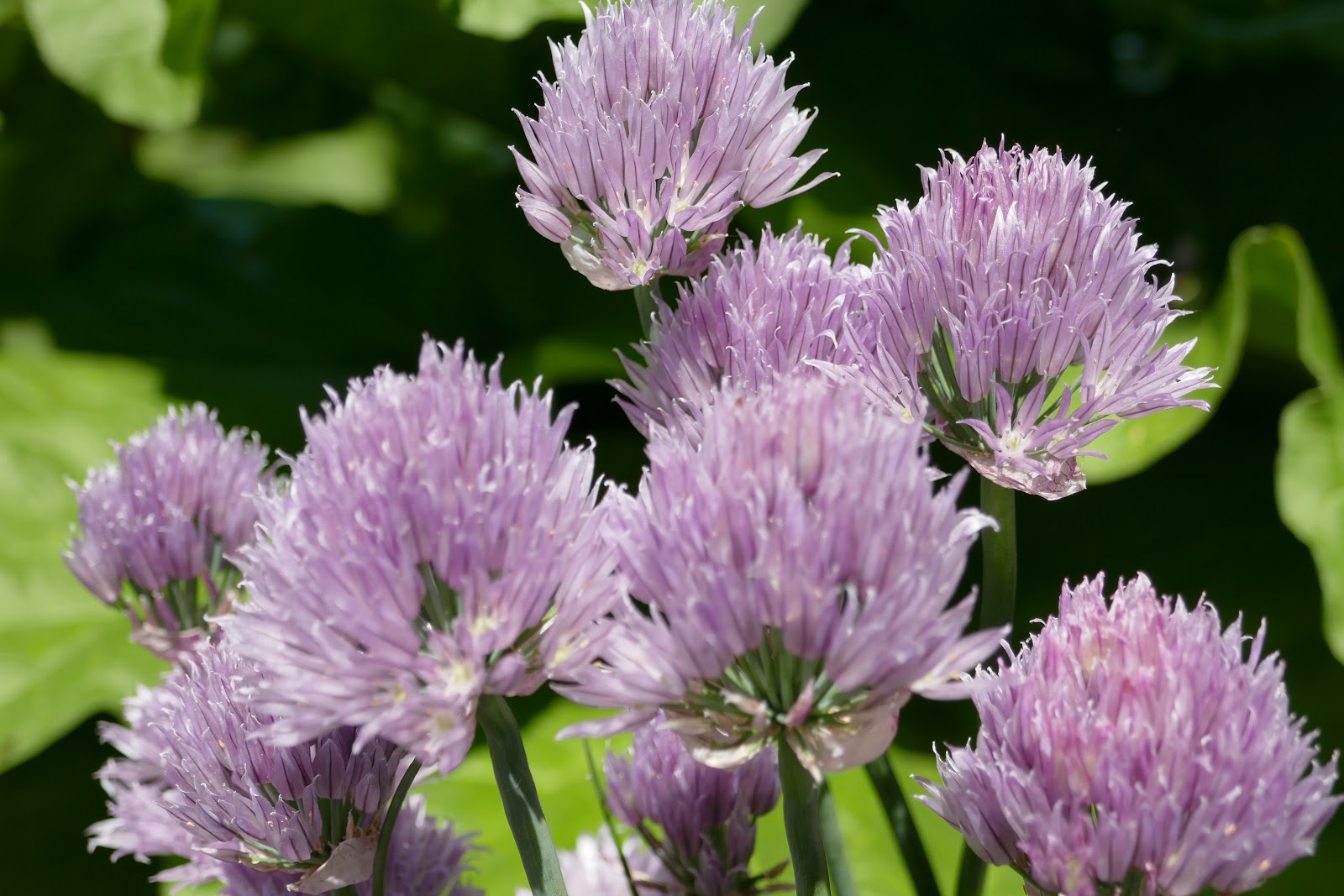

Such a pretty flower ... and tasty green plant!


But then the rains started. I did a posting last spring (May) describing the beginnings of our unexpected water world that spring. Still, some of the plants were making a go of it in spite of the flooding. Soon to arrive were the poppies. I always liked these guys because my Dad grew them in northern Michigan when we were children. Love the memory.  First just one opened ...


and then lots. Sadly they are fairly short lived, so their season of expression is limited.


You will note that I only took flower pictures when the sun was shining, which wasn't all that often, since we set several records for volume of rain over the first 4 months of the summer. In fact, the rain fall in July doubled the previous record for the month!! Still a few hardy plants proceeded as if this wasn't a serious problem. For example, the service berry (below) looked great, whereas the 5 apple trees went largely unfertilized (bees don't like the rain) and 4 of 5 apple trees had no apples at all.


The critters were looking everywhere for a meal, mostly along the edge of the fields where the older growth was marginally serviceable for both the deer and the turkeys.


But there wasn't much for the doe below where the new growth should be in the tilled field. Her fawn, of course, didn't really care because it was still nursing, and simply bounced around like popcorn while mom looked for some delectables.


Even the turkeys (like this one-year-old jake) began to hunt in our lawn for insects, since the pickings for edibles in the fields were now spartan and had mostly drowned.


The waterfowl did not mind too much, since geese eat grass by the tons.  When I took this shot, they had just entered the lawn (covered in aspen flowers) to feed, while the two mallard drakes were heading back to Windigo.


In fact, the grass appeared to like the rain, except in the places where it was under water. Needless to say, my under ground water sprinkler system did not run once from April (below) to August (next picture)


During this early deluge of water, the peonies bloomed and were lovely. I never guessed that they were so water tolerant. And again, first one ...


And then several.


We have 3 different color varieties, and they all seemed to do fine, even though they were often sitting in water.


Important to me also is the fact that the peonies flower for a long time -- like several weeks.


And the rains continued. Most of the other plants were suffering badly. The dahlias refused to grow at all and most ultimately died. The gladiolas struggled, but by the end of the summer they got a brief reprieve and a few bloomed. Nearly every day the sky would boil with thunder heads and then unload,


refilling the ponds to overflowing and again saturating ever inch of the place.


This drowning of most plants finally ended in August, but then we set another record. This new record, reflecting the period from early August into September, was for drought, i.e., the greatest number of days without rain! Can you believe it! By then most of the vegetable plants had simply died. This included most tomatoes, all carrots, beets, beans, peas, squash of all kinds (except for a few spaghetti squash).

Yet in spite of all of the previous water, here came the lilies!!! I never knew how incredible water tolerant their are. They all bloomed robustly.


One ...


after another ...


You would expect as much from the hardy day lilies, as they grow every where that they are planted.


But I was surprised that the more exotic lilies were equally tough.


And others.


There were a few other flower species that did survive to bloom, like the Shasta daisy.


And the lovely yellow coreopsis that I planted years ago, which has colonized the sides of our driveway from the house to the highway.


And one that I don't know the name (help), which I planted this spring, where it enjoyed a full season of growth independent of the endless water.


Even the hydrangeas did well for the first part of the season (below), as the rain off the roof flooded them daily. But by the end of the summer, however, the flowers had gone from white to green and then black with mold. You don't want to see that picture.


So the summer season ended in its typical fashion; the picture of winter's onset gives no evidence of what a disastrous growing season occurred for so many of our plants this summer.


But here again is mother nature selecting the survivors from the rest. I only hope that next year's green window is more user friendly for all the plants, and that my veggies and other edible plants have an easier 'kick at the can' to reach their full potential, so that I can enjoy refilling our freezer and cannery with their solar transformations. Here's hoping.

Incidentally, today (February 22, 2018) it is raining buckets, and has been for 2 days, with a temperature of 15 degrees C (60 F). Lots of water again and its only February. What kind of a sign is that for the new year?? By the way, the dog house that you see floating in the pond at the bottom of the picture is another experiment that I will describe to you when it is complete next summer.


The rain did not intimidate the deer tonight either as they arrived for apples and corn at 6 pm.


Enjoy ...


Saturday, 17 February 2018

spring visitors

Spring for me is at the top my list of favorite times of the year. I suspect this is because here in Canada's great white north the winter season is tough on life, and for many, it is a deadly struggle to survive the 5 months of bitter cold to reach that spring period of rejuvenation/rebirth. I thought I would share with you what happens here in our yard at the house as spring approaches to displace 'ole man winter' and my seasonal affective disorder.  I get great pleasure out of watching and taking pictures of our visitors, and often my 'game camera', attached to a nearby tree, captures the wildlife.

I feed the deer corn and apples (see below) most of the winter in an effort to locally prevent any die off from starvation. I can't do much about the coyotes, who MNR says kill about 70% of the fawns each year, but as you see the deer are always vigilant. Also, the wooded part of our house property (100 acres) is covered in white cedar and young aspen, the browse of which likely serves as their primary source of  protein and minerals.


As the snow and ice recede, the first birds to return each year to our ponds is our 'resident' goose pair. Even with the ice still on, every year they lay claim to both the trout pond, Emerald (< 1 acre) and the adjacent water fowl lake,Windigo (~10 acres). The gander below appears to be modelling Jock Wilcox's great blue heron, which normally is not under water.


The pair initially feed and groom in the trout pond.


With the recession of more snow, they spend more time sitting on a log defending the big pond,Windigo.


This is the time of the year when I plant the fingerling trout in Emerald Pond, if it is the right year to do so (every other year). Last spring was the right year (2017), which was described in an early posting. Below you see one freshly introduced rainbow trout bracketed by 3 brook trout immediately after planting.


Soon to follow the returning geese are the male mallards. First one, and then


and then many more


The geese have no problem sharing with the ducks, just other geese! If any other geese pairs circle to land, they will immediately take to flight to chase them away.  Note the hooded merganser female on the rock at the left.

My favorite returning ducks, however, are the wood ducks. Theoretically they have paired up before they return to the north country, but there are always a number of males who hang around the mated pairs and apparently live ever-hopeful that they might have an opportunity with the hen.


And here a woodie pair is being followed by a couple of males hoping to get lucky.


To facilitate their breeding success, I have built 4 nesting boxes for them. All 4 get used every year. The game camera has captured the hen entering one of the nests. Sometimes 2 hens, at different times of the day, will use the same box. Note the male standing guard, which only occasionally happens. Most often he sits in the nearest pond to that particular nest and waits for her to lay her single egg for the day. Then they fly off together.


I am always impressed when a hen daily returns to the nest to lay another egg. She flies into the nest at great speed with very little slowing down.


This year 2 of the 4 nests were shared with female hooded mergansers, who also like the nesting boxes. They are fish eating ducks with a hooked bill for grabbing minnows. The female has a reddish hood seen below, while the male's hood is black with a big white circle on each side. They look quite different from each other.


After the nesting period has passed in late June, I open the boxes to see how well the birds have done. I check the number of broken shells, suggesting successful hatching, and the number of unhatched eggs. All boxes had 6-12 broken shells this year, while two had 2 unhatched eggs each. Interestingly, in each of those two nests, there was one wood duck egg and one merganser egg. Looking down into one of the nests, the intact brown merganser egg can be seen among the broken white woodie shells, cushioned by my wood chips and blended with the down feathers from the mothers' chest.


Removing the unhatched eggs, you an see the relative size of the two woodie eggs compared to my drill battery.


Or compared to the smaller two brown merganser eggs on the back of the UTV.


After hatching, I did get to see one clutch of new merganser chicks this year, which were 6 in number. Most of the time the moms and chicks disappear immediately in Windigo, and might be seen only once or twice over the course of the first few weeks. Then they are reported in the literature to simply walk away (as they disappear from my ponds). There is a 200 acre Ducks Unlimited marsh about a half mile away where I suspect that they go, along with any successful goose clutches.

This past spring, at about this time, I was mentioning to my daughter-in-law, Tracey, that I would like to get my hands on a pair of Muscovy ducks, who normally hang around all summer and do not disappear like the wild birds. Tracey knows a woman who raises them and would inquire on my behalf.

Much to my surprise, a couple of days later, I returned home from the cottage and discovered a Muscovy in the yard hanging out with the geese. I thanked Tracey for the bird, but she said she had nothing to do with it!  What?? We have still never figured out the origin of the bird. None of the neighbors had birds. I suspected that it would go away as quickly as it came, but not so. The bird wasn't as big as the male Muscovy's I had raised in previous years, so we assumed it was a female and we named her Mabel. Within a few weeks, the geese had disappeared and Mabel (below) was alone. As she was alone, we checked again with the person raising the Muscovy's so many miles away to she if she a potential companion for Mabel. She had a infertile white hen she as happy to offload to me. 


After introducing the new white Muscovy to Mabel, the new bird was quickly mounted (after all it was still spring and the Muscovy's are sexually active until August). Thus Mabel became Marvin, and the new white hen was now Mabel. They soon became buddies for the rest of the season.


One of my favorite spring visitors is the rose breasted grosbeak. He would come to the feeder every day, and if there wasn't food in it, he would sit there and look at me til I got up from my chair and returned with the sunflower seeds. Cheeky but cute.


Perhaps my favorite all season regular is the mourning dove. Although they can be annoy for those with good hearing, unfortunately for me this is no longer a problem!


And sap!! Apparently I am going to have to improve my Ninja moves if I am going dodge lethal missiles coming my way in the future. By its location, this one appears to have been delivered by a professional assassin.


The other birds that frequent the yard in the spring, and on into the summer and fall, are the wild turkeys. They like my corn, but not the apples, and frequently before planting go through the raised gardens for bugs. 


They are also fond of the 2 small fields (1 and 2 acres) that I have planted with clover, alfalfa and various grasses for them and the deer. They begin working there in the early spring before much has emerged from the wet ground. Last year much of this field simply drowned from the relentless rain (an earlier posting).  It did grow up later in the summer with lots of weeds that they enjoyed.


After grooming the fields for food, often they roost for the night in the large poplars immediate next to the field. In this case, right behind the wood duck nest closest to the house.


and most often just at sunset.


And if it is still spring, the tom turkeys will be there too, always hoping to impress one of the fertile hens. Most of the time, the hens ignore him. However, this not true all of the time, as most hens show up later with a clutch of 6-10 chicks at some time during the early summer. 


To get to this point, however, the hen has to avoid her nest being discovered either by the male (as he will destroy the eggs to keep her in a state of breeding), or the many egg predators including fox, coyote, raccoon, mink, skunk, fisher and others! Once the chicks hatch, they have a much better chance to survive as, unlike many of our other avian visitors, they can fly immediately.

As you can see, there is lots of avian wildlife activity here to amuse me from early spring into late fall, when again many of them leave for warmer surrounds -- as I would like to also!